
In the Name of God, the Most Gracious, the Most Merciful
His Eminence, the Grand Imam, Professor Dr. Ahmad Muhammad Ahmad al-Tayyib, Sheikh of al-Azhar al-Sharif,
Peace be upon you and upon the righteous servants of God;
I was deeply astonished by the text attributed to al-Azhar, which has been widely circulated across virtual platforms and contains harsh and troubling content in its accusations against the Islamic Republic. I therefore deemed it necessary to bring the following points to Your Excellency’s attention, in Your capacity as the senior authority of this esteemed institution:
- It was the expectation of the free global community and members of the Islamic Ummah that Your Excellency, together with the scholars of that historic religious and academic institution, would adopt a responsible, clear, and courageous stance in defense of the Islamic Republic of Iran—particularly as it has been subjected to aggression, during the blessed month of divine hospitality, for no reason other than its defense of the cause of the liberation of Palestine. It was further expected that you would raise objection to those countries that have placed their land and air facilities at the disposal of such forces to carry out attacks against Iran, and that you would remind them of the religious (shar‘i) ruling concerning such actions.
However, regrettably, following the meaningful silence of Your Excellency and other scholars of that institution in the face of the unjust martyrdom of a prominent, wise, and devoted leader of the Islamic Revolution, along with a number of senior military and security officials, as well as a large number of civilians—many of whom are oppressed women, children, and adolescents—we are now confronted with a statement of such weakness and inadequacy that, instead of condemning the oppressor and the perpetrator, it directs accusation and condemnation toward the oppressed and the victims themselves.
“Do you kill a man for saying, ‘My Lord is Allah,’ while he has come to you with clear proofs?” (Qur’an 40:28). In what direction, then, are you heading?
- The long history of relations and coexistence between Iran and the countries of the region stands as clear testimony that our nation has consistently acted with goodwill toward them and has never engaged in aggression against them. Yet, at present, certain countries—contrary to explicit religious rulings grounded in the clear texts (Nusus) of the Qur’an, including: “And never will Allah grant the disbelievers a way over the believers” (Qur’an 4:141); “O you who have believed, do not take the Jews and the Christians as allies…” (Qur’an 5:51); “Let not the believers take disbelievers as allies instead of the believers” (Qur’an 3:28); and “Allah only forbids you from those who fight you because of religion and expel you from your homes… that you make allies of them” (Qur’an 60:8)—have placed themselves under the influence of hostile external powers. They have provided them with military bases, granted them access to economic resources and infrastructure, and, over recent decades, such entities have repeatedly used the facilities of these countries to carry out aggression against Muslim nations—including Iraq, Afghanistan, Palestine, Lebanon, Yemen, and now the Islamic Republic of Iran—occupying the lands of Muslims.
Accordingly, I pose this question to Your Excellency: should such states not be regarded as complicit in the aggression of these hostile powers against Islamic lands? And if so—as indeed it appears to be the case—what, then, is the responsibility of religious scholars and the leaders of other Muslim countries in the face of such cooperation with hostile forces?
- Despite the open assistance provided by certain countries to aggressor forces during the twelve-day war—including cooperation that facilitated attacks on Iran’s infrastructure and interests, the killing of officials, and the destruction of national facilities—a strong Iran exercised restraint, limiting its response to admonition and expressions of concern. Even prior to the outbreak of hostilities during Ramadan, Iran had issued an explicit warning that, should such countries once again assist hostile forces, it would exercise its legitimate religious and legal right of response. Yet these warnings went unheeded; indeed, cooperation with the aggressor expanded further.
Today, the Islamic Republic of Iran considers itself engaged in the defense of its land, people, and national interests in accordance with the principles of the noble Islamic law and on the basis of Qur’anic injunctions, including: “Permission [to fight] has been granted to those who are fought because they have been wronged, and indeed Allah is capable of granting them victory” (Qur’an 22:39); “Fight in the way of Allah those who fight you” (Qur’an 2:190); “Whoever transgresses against you, respond in like measure to that transgression” (Qur’an 2:194); and “Fight them until there is no persecution” (Qur’an 2:193).
Accordingly, drawing upon both reason and the explicit guidance of divine revelation—“And kill them wherever you encounter them… but if they fight you, then fight them” (Qur’an 2:191) and “If they turn away, then seize them and confront them wherever you find them” (Qur’an 4:89)—Iran maintains that it possesses the right to confront and deter hostile forces wherever they may operate. From this perspective, the location of such forces—whether within zones of conflict, non-Muslim territories, or even within Muslim lands—does not alter the principle of defensive response, regardless of whether they are stationed in military bases, at sea, in open terrain, or within civilian facilities.
I therefore ask Your Excellency: had hostile forces launched attacks against Muslim Egypt using the bases and facilities of these same countries, would our esteemed colleagues at al-Azhar have condemned Egypt for defending itself—or rather the aggressor forces and the governments that cooperated with them?
It is my sincere hope that other legal opinions issued by our respected brothers at al-Azhar are not founded upon similarly fragile reasoning, nor issued in contradiction to the well-established principles derived from the clear texts of divine revelation, or influenced—however unintentionally—by partisan political or regional considerations.
- At the present time, and in accordance with the Qur’anic injunction “Do not cooperate in sin and aggression” (Qur’an 5:2), it is incumbent upon those states to immediately and unconditionally close the bases made available to aggressor forces, cease logistical support, halt fuel supply and all forms of service provided to hostile military formations, and restore full sovereignty over their territories by ending such foreign military presence. By doing so, they would not only remain safe from potential military responses by the Armed Forces of the Islamic Republic, but could instead benefit from the support and goodwill of the Islamic Republic of Iran.
Otherwise, when attacks against Iran—targeting residential complexes, hotels, universities and seminaries, medical centers and hospitals, airports, fuel depots, energy infrastructure, and other civilian and national facilities—are launched from bases and installations placed at the disposal of hostile forces by these governments, Iran, in accordance with the principle of reciprocal response and for the purpose of establishing deterrence, will inevitably consider itself compelled to respond in kind against both the aggressors and those who assist them. As expressed in the eloquent words attributed to our master, Amir al-Mu’minin ‘Ali ibn Abi Talib (peace be upon him): “Return the stone from where it came, for evil is repelled only by evil.” (Nahj al-Balagha, Saying 314)
In conclusion, I respectfully suggest that, alongside offering guidance and counsel to those who issue such statements, Your Excellency—who on previous occasions has adopted courageous and balanced positions—once again take a stance commensurate with the gravity of this historic moment. For, God willing, these days shall pass with the decisive victory of the Islamic Republic of Iran and the Resistance Front; yet history, and future generations, will ultimately judge our words and actions in this decisive period.
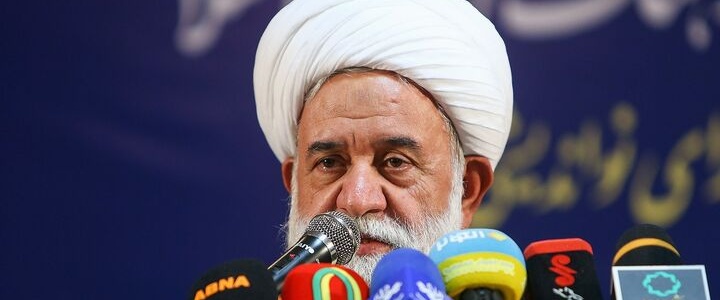
Ali Akbar Rashad
President of the Seminary Council of the Capital of the Islamic Republic of Iran
and President of the Research Institute for Islamic Culture and Thought